The Lovers’ Vineyard

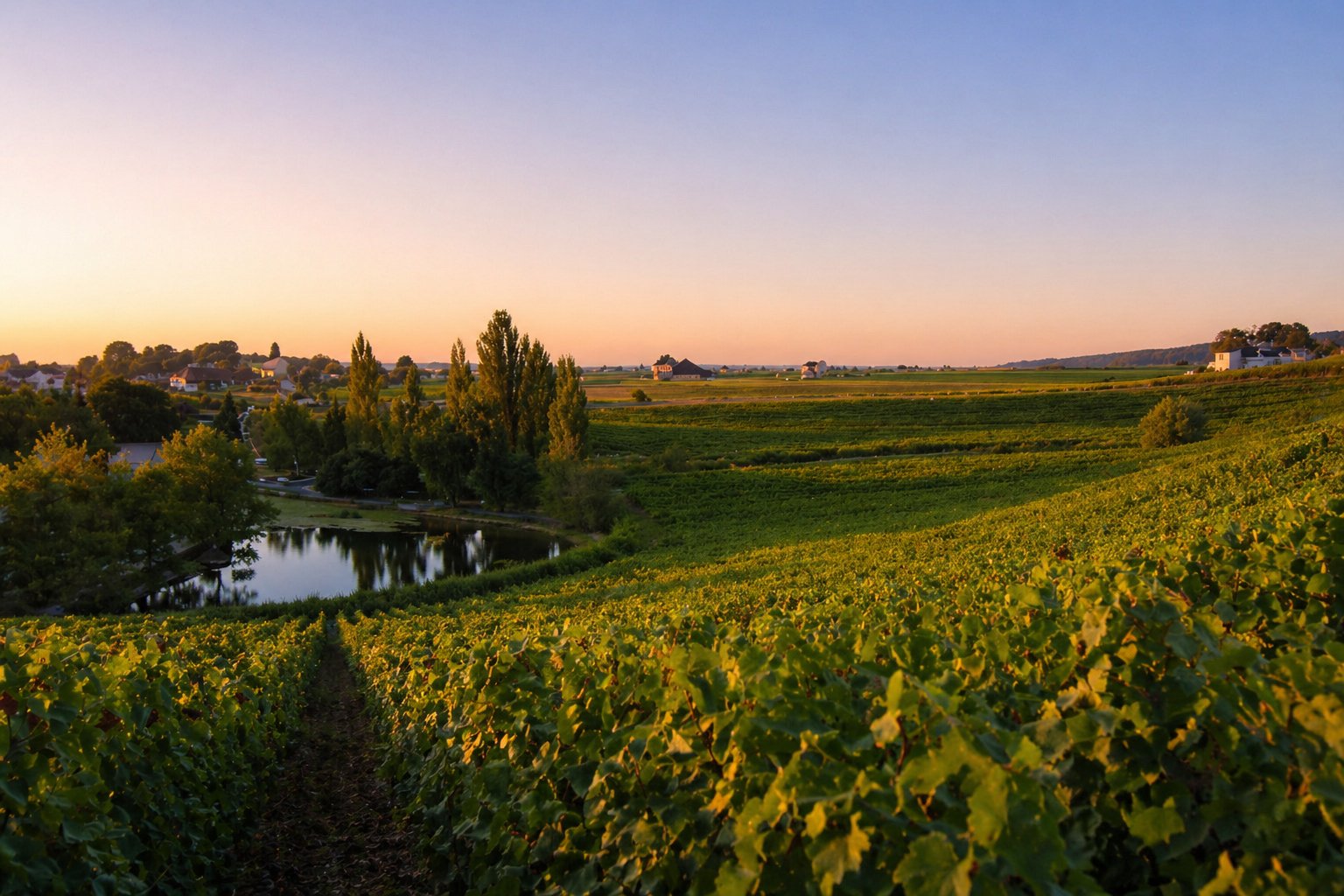
There is a premier cru in Chambolle-Musigny that the classification never quite managed to contain. On paper Les Amoureuses is one step below the top. In the glass, and on the market, it has long been treated as an equal of the grands crus around it. Ask a Burgundy collector to name the finest premier cru on the Côte de Nuits and most will answer before you finish the question.
The name means the lovers. Nobody agrees on why. Some say the clay once clung to boots like a lover; some say the slope simply faces the right way. What is certain is the address: directly below Musigny, sloping down towards the walls of Clos de Vougeot, in the stretch of hillside where Chambolle’s famous finesse is at its most concentrated.
Limestone above, oysters below
Les Amoureuses covers about 5.4 hectares. The upper part sits on hard limestone, close to the surface; lower down the rock gives way to white marl set with fossil oysters, the remains of a sea that covered Burgundy long before anyone planted a vine. The two soils give the wine its double nature: the lift and perfume of the stone, the depth and texture of the marl.
It is shared, as almost everything in Burgundy is, among a small number of families. Most hold a few rows. One holds far more.
Most hold a few rows. One holds far more.
Groffier
Domaine Robert Groffier is the largest owner in Les Amoureuses, with just over a hectare spread across twelve separate plots that run through every part of the slope, top to bottom. Some of the vines were planted as early as 1919; the youngest date from the end of the last century. No other estate can draw on the whole vineyard in a single wine.
The rest of the cellar is short and serious: Chambertin-Clos de Bèze from about 0.42 hectares of roughly century-old vines, Bonnes-Mares from the Morey side of the grand cru, and Les Sentiers, the way into the house. Since 2014 the domaine has released only half of each vintage, holding the rest back in its own cellar. That patience is why a vertical like this one still exists.
Thirty years, one magnum each
Seventeen vintages, from 1984 to 2015, one magnum of each, all from the domaine’s own cellar. The oldest are the rarest: 1984 and 1986 were difficult years, few bottles were kept and fewer survive in this format.
The nineties bring 1993, underrated at release and long since vindicated, and 1998, firm and thick-skinned, finally given the decades it needed. The 2000s run from the heatwave of 2003, monumental from old vines, to the ripe generosity of 2009. The last chapter opens with 2010, a return to freshness with a third less wine than usual, and closes with 2015, early, low-yielding and extremely fine, the youngest of the set and built to last.
Why magnum? Because a large bottle ages more slowly and more evenly, and because Amoureuses, of all wines, rewards time. A magnum of a thirty-year-old Chambolle from its largest grower is not something the market sees often. Seventeen of them, together, it almost never sees.
Where to begin
- The rarest. 1984 and 1986, the oldest bottles of the vertical
- To open now. 1997, charming from the start
- The great years. 2010 and 2015, freshness and depth in magnum
- The outlier. 2003, the heatwave year, unlike anything else
- The grands crus. Clos de Bèze and Bonnes-Mares 2023, up to six litres
One vineyard, one family, thirty years. Les Amoureuses in magnum, from its largest owner, available to members on Crurated, from the domaine’s own cellar.