The Village Behind the Hill

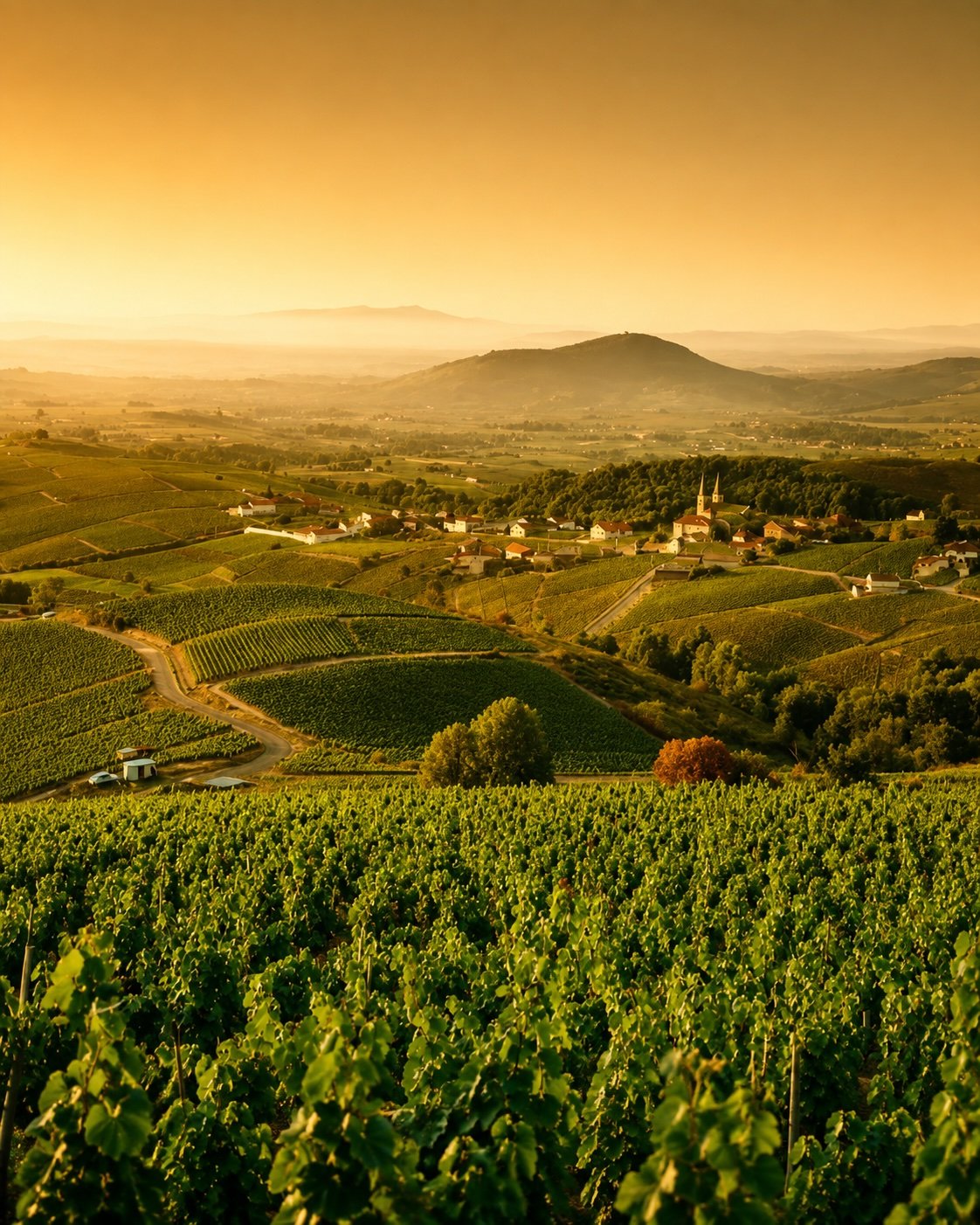
Walk south out of Puligny along the Route des Grands Crus and the most famous vineyard in white wine passes on your right almost without ceremony: a low stone wall, a gate, a few rows of Chardonnay. Le Montrachet. Most visitors stop there. The ones who know keep walking.
Past the wall the slope bends, the limestone changes colour, and Chassagne-Montrachet begins. It is a larger, quieter, more complicated village than its neighbour, and for a long time it was not a white wine village at all. Within living memory Pinot Noir held most of these slopes. Chardonnay climbed the stonier ground and, over half a century, took the rest. The red past never quite left: it survives in the soils, in a handful of serious reds, and in a certain weight that even the whites carry.
What Chassagne has, more than almost anywhere in the Côte de Beaune, is range. More than fifty named premier cru climats, many of them a few rows wide, run from the edge of Saint-Aubin to the border of Santenay. Read them north to south and the village changes accent every few hundred metres.

On the shoulder of Le Montrachet
The smallest and most coveted premiers crus sit on the hill itself. Blanchot Dessus touches Le Montrachet along its southern edge: same slope, same rock, a different classification. Dent de Chien lies above the grand cru at the stony crest, vines rooted in little more than broken limestone. En Remilly looks across towards Saint-Aubin, airy and precise.
This is where Domaine Coffinet-Duvernay does its closest work. Born in 1989 from two Chassagne families, the estate farms seven hectares, all of them inside the commune, and owns both premiers crus that border Le Montrachet. This year they come in a single format: the three-litre bottle, one each of Dent de Chien and Blanchot Dessus 2024.
Bruno Colin reads the same hill from a different angle. Son of Michel Colin-Deléger, he set out under his own name with the 2004 vintage and now farms 8.75 hectares in some thirty parcels, vinifying each apart. His En Remilly and Blanchot 2015, released in magnum after a decade in the cellar, show what this ground does with time.
Same slope, same rock, a different classification.
Around the houses
Closer to the houses, the soils deepen and the wines widen. La Maltroie, named for the château that stands beside it, gives ample, textured Chardonnay held in place by stone. It is the climat Colin returns to most: four vintages are open, 2020, 2021, 2023 and 2024, a rare chance to taste one vineyard move through four very different years. Armand Heitz, the young farmer of the Heitz-Lochardet family, answers with his own Maltroie, 2019 and 2020.
Morgeot and beyond
Then the slope opens into an amphitheatre. Morgeot is less a vineyard than a family of them, a dozen lieux-dits gathered under one name, on deeper clay and limestone that give the broadest, most powerful wines in the appellation, white and red alike.
At the top of the list is Ramonet. No name in Chassagne carries more weight with collectors, and few are harder to find. Jean-Claude Ramonet’s Morgeot Blanc 2025 arrives alongside La Boudriotte Blanc 2024, from the climat that runs beside Morgeot towards Santenay, and a Morgeot Rouge 2024: three wines that between them make the case for both colours of the village.
Domaine Dancer works the same ground with a younger hand. Théo Dancer joined his father Vincent in 2016, took full charge in 2021 and, from the 2024 vintage, dropped the first name from the label. The vines have been certified organic since 2012. The 2024s are here in white and red: Morgeot, and Morgeot Rouge.
Within Morgeot, Tête du Clos is bottled as a climat of its own by Ballot-Millot, a Meursault family; the 2022 is offered in magnum.
Not a footnote
Chassagne’s red history is best tasted, not told. Darviot-Perrin, eleven hectares farmed with compost and no herbicides, makes a premier cru Les Bondues rouge from nearly fully destemmed fruit, eighteen months on fine lees, unfined and unfiltered. The 2023 is in magnum: Pinot Noir with the frame of a white wine village and the depth of the old one.