
Burgundy 2025, Concentration and Freshness

Burgundy 2025 Vintage Report
Download the full report, PDF, 23 pages. Free, no sign-up. The complete document our buying team recorded on the slope, with every picking date and every figure behind this reading.
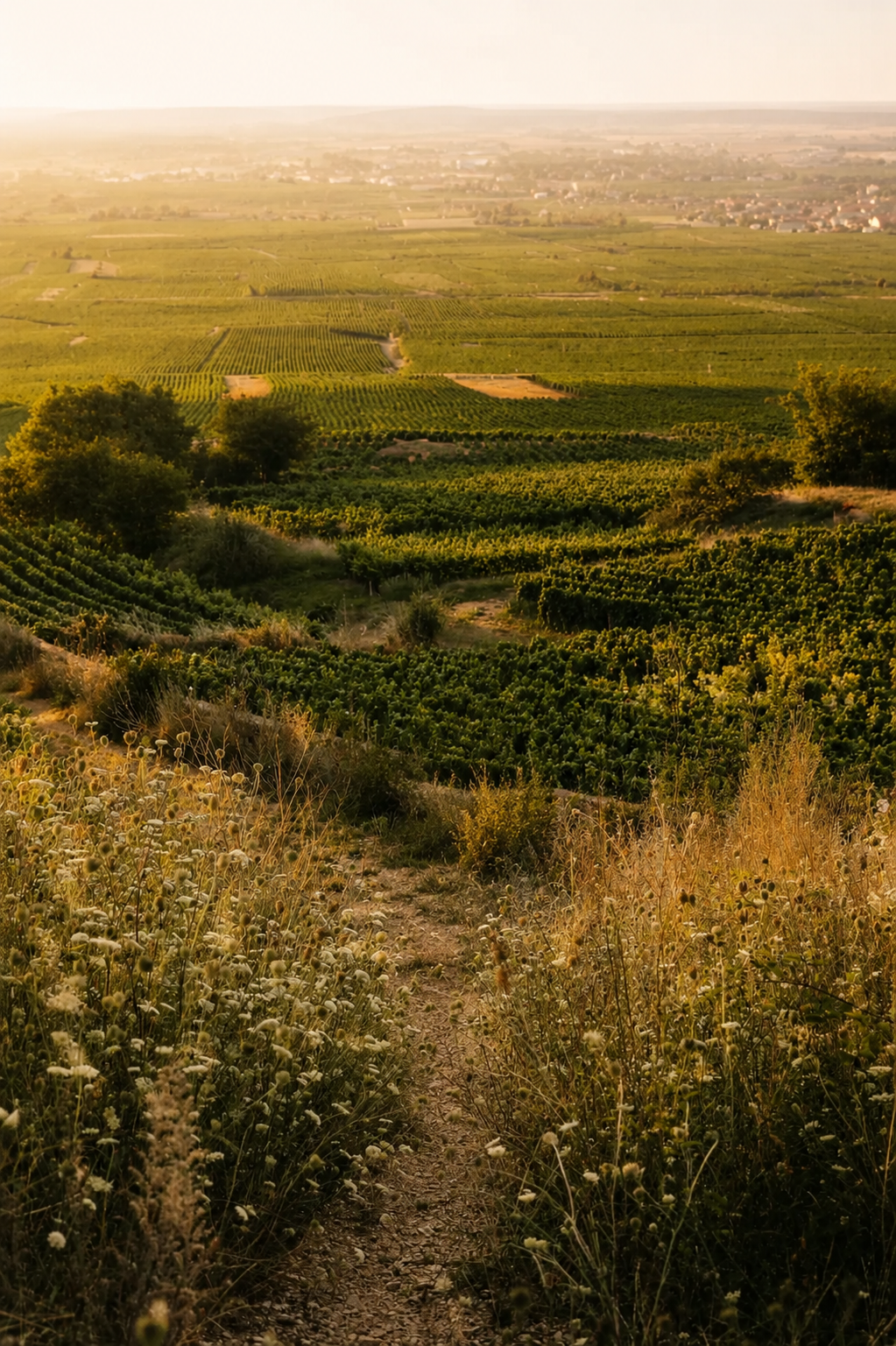
The vintage is very promising.
Our buying team has been through the early 2025s, tasting across the region and speaking with the estates as the picture takes shape. Three things come up in every conversation: concentration, freshness and beautiful fruit, once again in limited volumes similar to the 2024 vintage in that sense.
The growing season ran ahead of itself from the start. The vegetative cycle began early, flowering came quickly at the end of May, and two periods of intense heat, in June and again in August, pushed ripening further forward. Flowering was not perfect everywhere, and millerandage was widespread.
Harvest opened exceptionally early, from around 18 August. Rain during the picking period then complicated the decision for every domaine still on the slope.
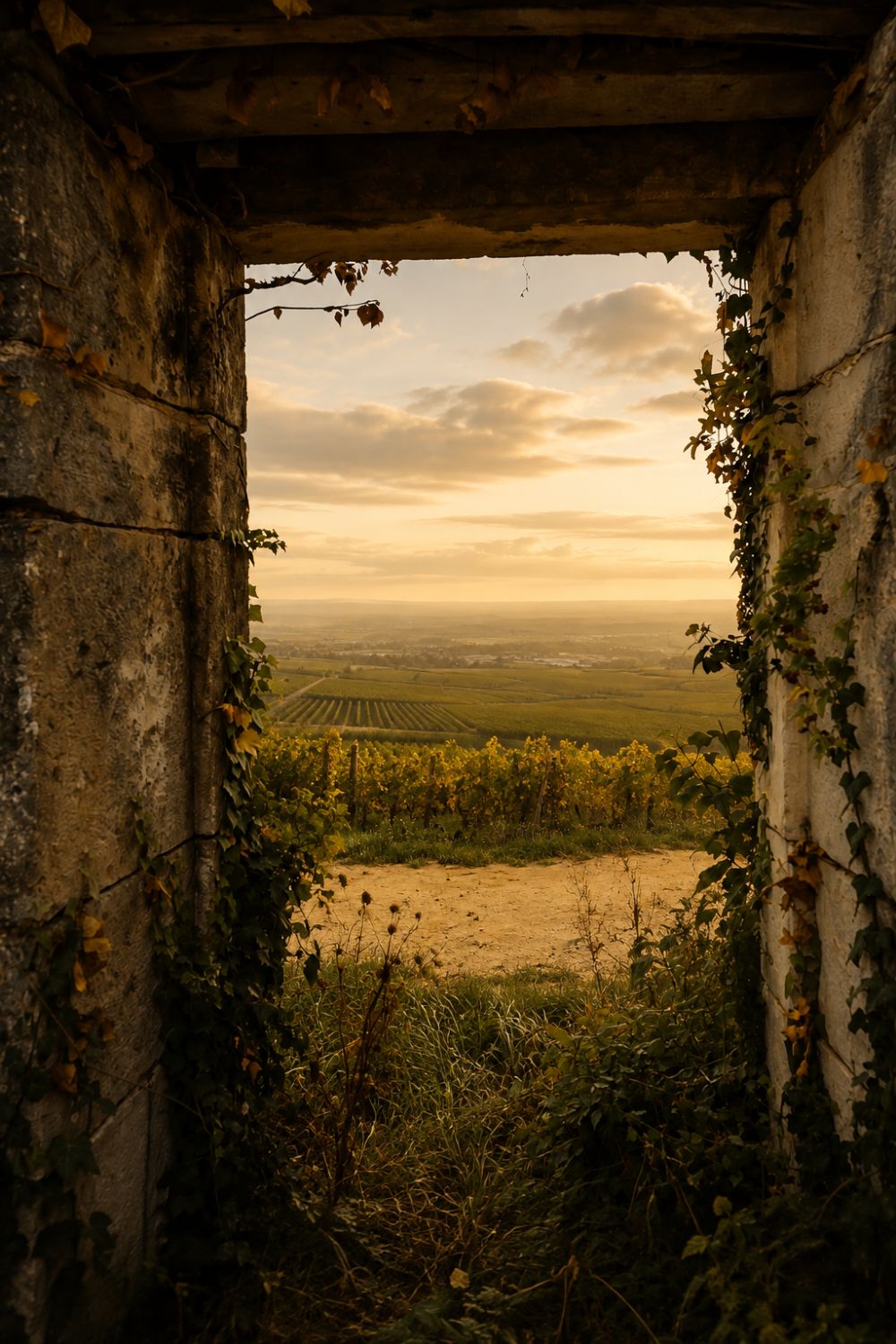
Volumes vary considerably from one domaine and one vineyard to the next. There was no single climatic event behind the shortfall. It came from several factors accumulating through the season: some frost, imperfect flowering and some summer water stress.
What matters more is the condition of what came in. The sanitary state of the fruit was excellent, and a small crop of small berries has produced wines of considerable intensity.
Two things follow. The first is that 2025 will be read domaine by domaine rather than appellation by appellation, because the picking decision mattered as much as the address. The second is that the wines are already showing well, which is unusual this early in the life of a Burgundy vintage.
A vintage of ripe, expressive fruit, concentration and generosity, supported by enough freshness to hold the precision and elegance we look for in Burgundy.
The whites came into the picture first
Picking opened around 18 August, and in the Côte de Beaune, Chardonnay was largely in the cellar before the weather turned. Meursault went first, on the 19th. Bâtard-Montrachet came in at Puligny the same day, Beaune took Clos des Mouches blanc on the 22nd, and Puligny was working Clavoillon by the weekend of the 23rd.
The reason given on the slope at the time is the plainest account of the vintage anyone offered: the degrees were rising so fast that it was time to harvest them.
The wines reflect it. Two profiles have emerged. One is fresh and tense, with pear and white peach and a firm line. The other is rounder and fuller, with tropical nuance and amplitude. Both keep the acid structure of a serious year, and total acidities in the finished wines are reported at four to five grams per litre.
Alcohol levels are moderate. Well-timed fruit in Chablis came in at eleven and a half to twelve and a half degrees, a little higher in the Côte de Beaune. Depth, concentration and balance are there, which is not a combination this region delivers every year.
Aligoté deserves a line of its own this year. A stellar vintage for the balance it strikes between acidity and alcohol.
The practical consequence is that the whites of 2025 should be judged on the calendar as much as the cellar. Where the fruit came in before the front, the wines have both ripeness and line. Where it came in after, the domaine's sorting table did the work.
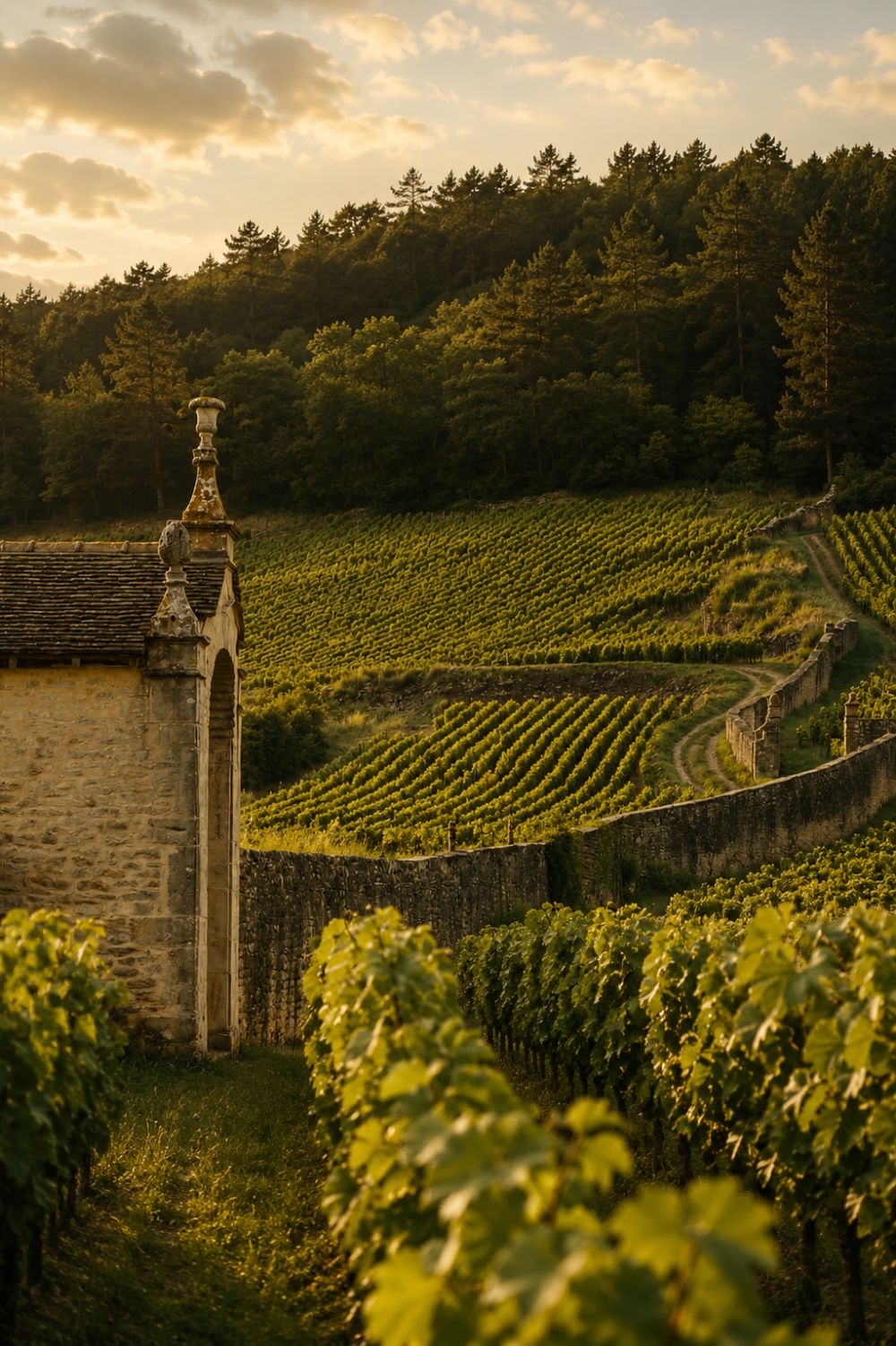
The reds are gourmand and generous
From the early wines our buying team has tasted, 2025 is immediately gourmand and fruit driven. There is beautiful fruit concentration and energy, without the wines feeling heavy or extracted.
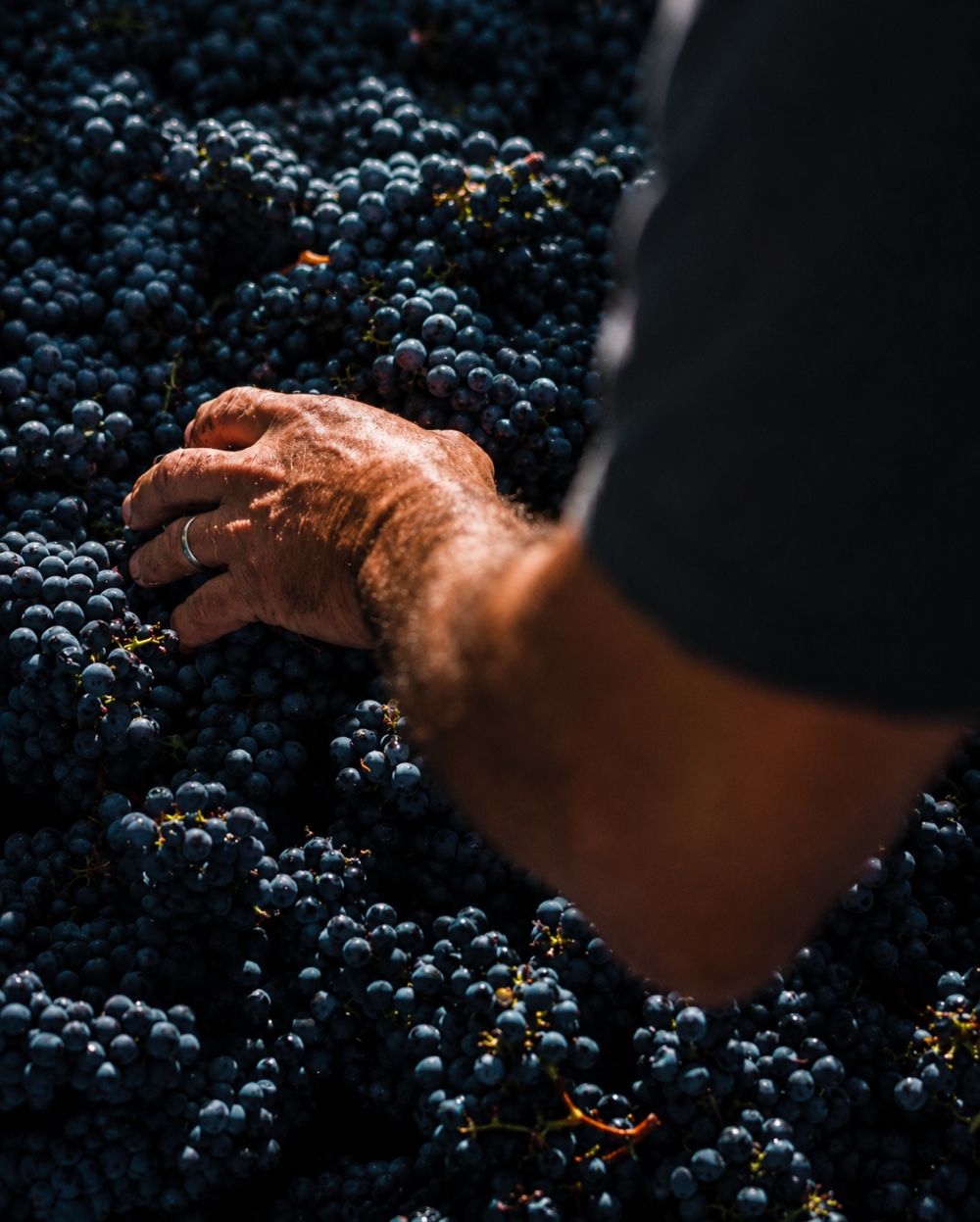
Pinot Noir berries were generally small, with relatively thick skins and significant levels of polyphenols, giving potentially deep colour and structure.
The best wines have kept the freshness that balances it.
It is a year that will reward patience in the glass and restraint in the cellar. The reds are approachable now, which is not the same thing as being short-lived, and the structure underneath suggests they will hold for a good deal longer than their charm implies.
Colour is strong, the tannins silky, the fruit in the cherry and raspberry register, delicate on the surface but with genuine ageing potential underneath. A public caution against over-extraction went out to growers during the vintage, and it reads the material correctly: thick-skinned, small-berried fruit at moderate degree rewards a light hand.
What shaped the vintage
Bud break came early and the cycle never slowed. Flowering began on 26 May and moved fast, erupting over the Ascension weekend in the precocious sectors. Where it ran into wind and rain, in the later and wetter parcels, it produced coulure and millerandage.
That is the origin of the small berries that define 2025. Berry weight across the region finished fifteen to twenty per cent down.
Two heatwaves followed, the first in late June, the second from 8 to 18 August, with the Côte d'Or touching thirty-eight degrees. Ripening accelerated and the berries shrank further. Véraison arrived around 20 July, roughly three weeks ahead of a normal year.
The turning point came in late August. A cold front broke the heat and brought rain across the region while picking was under way. Around 100 mm fell on the Côte d'Or in seven days, and 120 to 130 mm in Chablis over ten.
For the domaines that had finished, it changed nothing. For those still on the slope it set the question of the vintage: hold for phenolic maturity, or bring the fruit in. Both answers made good wine in 2025, and they made different wine.
Disease pressure stayed low throughout. Treatment counts in the Côte de Beaune ran as low as eleven across the entire season, and the fruit came in clean.
Read together, the season explains the wines. An early cycle and small berries gave the concentration. The late-August front gave back the freshness. Very little about 2025 is uniform, and almost none of it is accidental.
Sugar ripeness arrived long before phenolic ripeness. The decision was never when to pick, but whether to wait for the tannins.
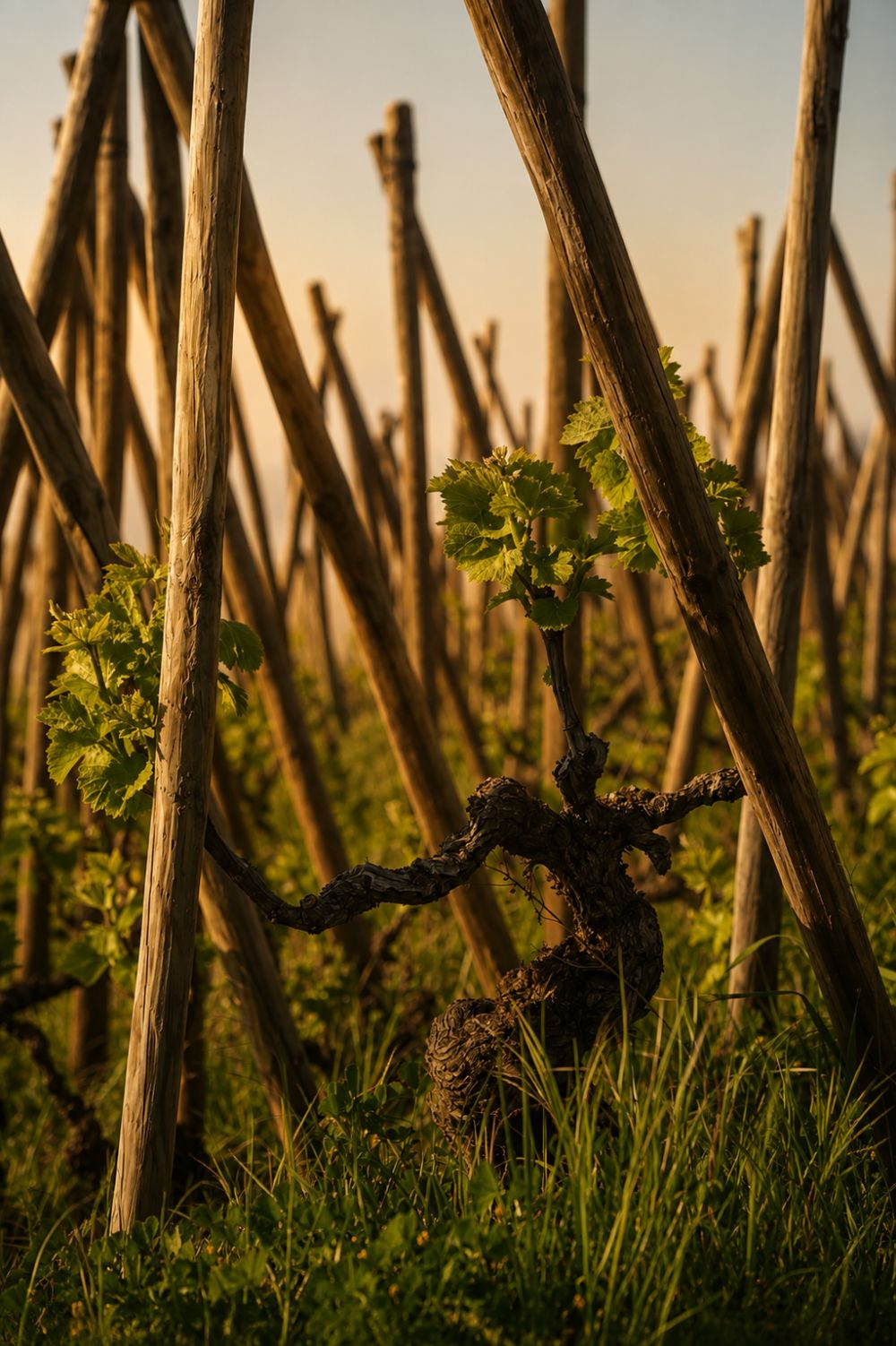
The season in numbers
- 18 August. Harvest opened, among the earliest starts on record. The first still wines were picked in Meursault the following day, and rain during the picking period then complicated every remaining decision.
- 15 to 20 per cent. The fall in berry weight, after coulure and millerandage at flowering and two periods of intense summer heat. A high skin-to-juice ratio followed.
- 20 July. Véraison, roughly three weeks ahead of a normal year. Flowering had begun on 26 May and moved fast; the cycle never slowed from bud break to picking.
- 38 °C. Peak temperature in the Côte d'Or. Two heatwaves, the first in late June and the second from 8 to 18 August, accelerated ripening and shrank the berries further.
- Around 100 mm. Rain on the Côte d'Or in the seven days from 27 August, as a cold front broke the heat mid-harvest. Chablis took 120 to 130 mm over ten days.
- 12.2 to 13.5 per cent. Potential alcohol across the Côte d'Or reds, moderate for a year with two heatwaves. Well-timed Chablis came in at 11.5 to 12.5%.
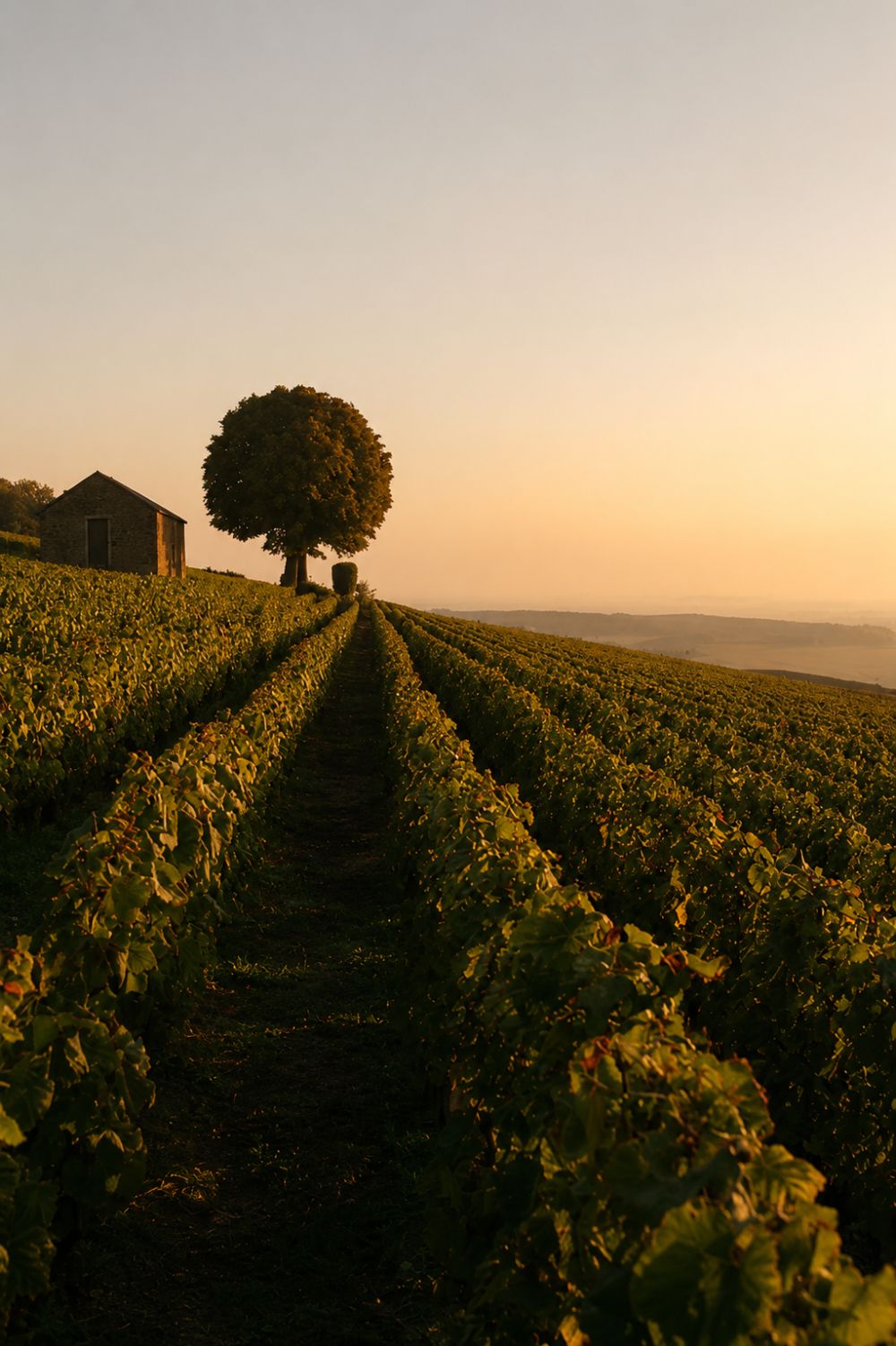
The style of the best 2025s
Across both colours the most promising wines share a clear family resemblance. Small berries gave the concentration, and rain around harvest helped hold the freshness. The result is depth and balance in the same glass.
- Concentration from small berries. Millerandage and summer heat left the berries carrying little juice. A high skin-to-juice ratio, deep colour and real substance without any need to push extraction.
- Freshness held through. Rain around picking helped hold or restore the freshness. Acidities are intact, and the wines carry their ripeness with precision rather than weight.
- Fruit driven and expressive. Fruit concentration and energy, open and generous from the first pour, without the wines feeling heavy or extracted.
- Clean fruit, minimal disease. The health of the fruit was excellent and disease pressure stayed low all season. Sorting, where it was needed, was a matter of precision rather than rescue.

The regions
Picking dates, rainfall and ripeness varied materially from one zone to the next. In 2025 those differences matter more than usual.
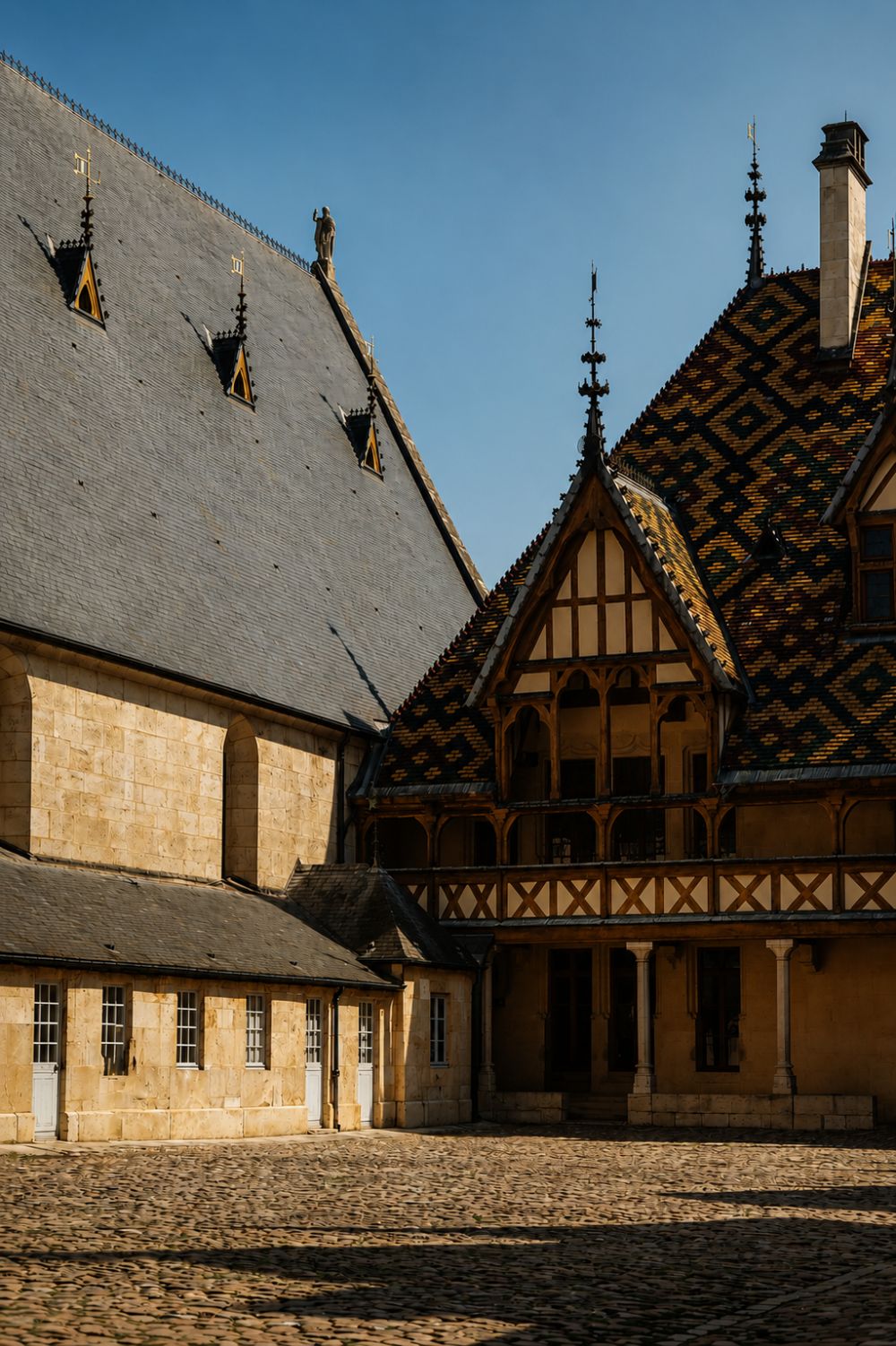
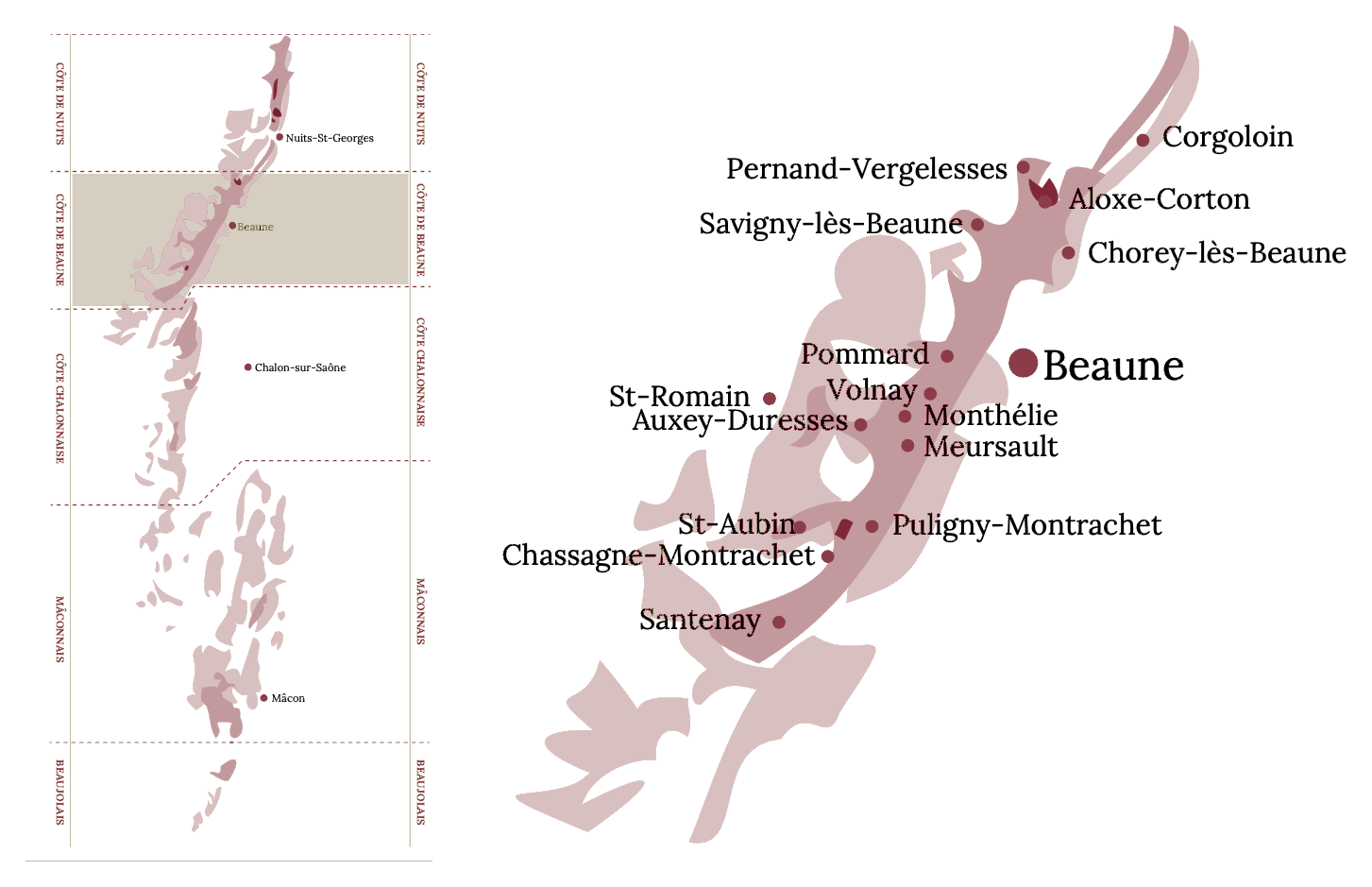
Côte de Beaune
Pernand-Vergelesses, Aloxe-Corton, Savigny-lès-Beaune, Chorey-lès-Beaune, Beaune, Pommard, Volnay, Monthélie, St-Romain, Auxey-Duresses, Meursault, St-Aubin, Puligny-Montrachet, Chassagne-Montrachet, Santenay.
Picking opened early: Meursault took the first still-wine fruit of the Côte d'Or on 19 August, with Bâtard-Montrachet coming in the same day. The Chardonnay was harvested before the weather turned, and the whites carry the precision that follows.
The reds followed a week to ten days later, with Volnay only just starting on 3 September. Strong colour, supple tannins, moderate degree, and Savigny, Pernand-Vergelesses and Chorey are where that profile is most affordable.
Our reading. The sharpest division of the vintage does not run between the two Côtes. It runs down the middle of the Côte de Beaune, between its whites and its reds.
- Whites picked: 19 to 27 August
- Reds picked: 1 to 9 September
- Potential alcohol: 12.2 to 13.5 per cent
- Early pickers: 13 to 14 per cent
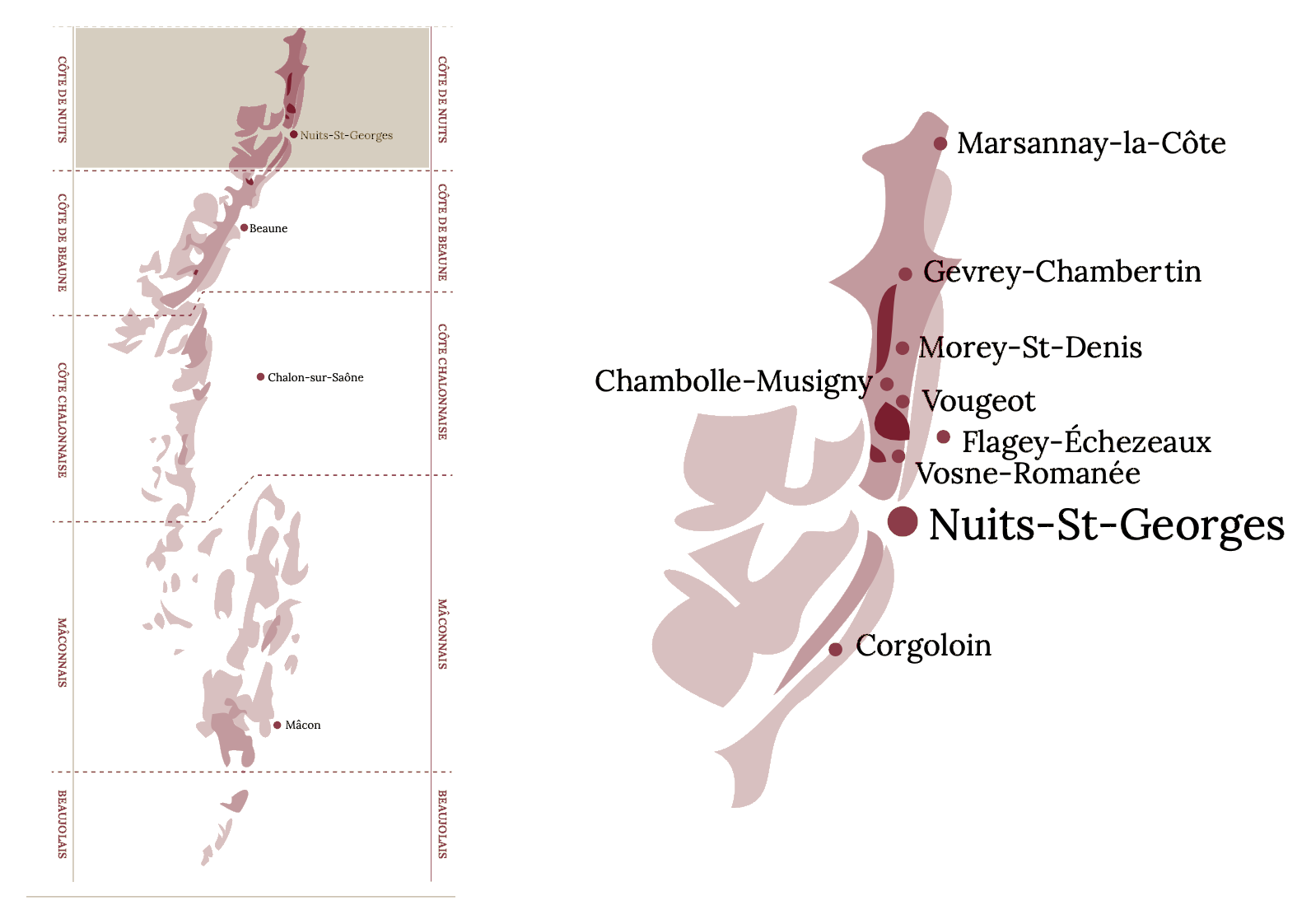
Côte de Nuits
Marsannay-la-Côte, Gevrey-Chambertin, Morey-St-Denis, Chambolle-Musigny, Vougeot, Flagey-Échezeaux, Vosne-Romanée, Nuits-St-Georges, Corgoloin.
Sugar ripeness arrived long before phenolic ripeness, and the slope chose to wait for the tannins, which put almost all of it on the far side of the late-August rain.
Vosne-Romanée took its grands crus on 6 and 7 September; Gevrey was still picking Chambertin on the 8th; Marsannay closed the harvest on the 9th. Small berries, thick skins, deep colour, moderate alcohol.
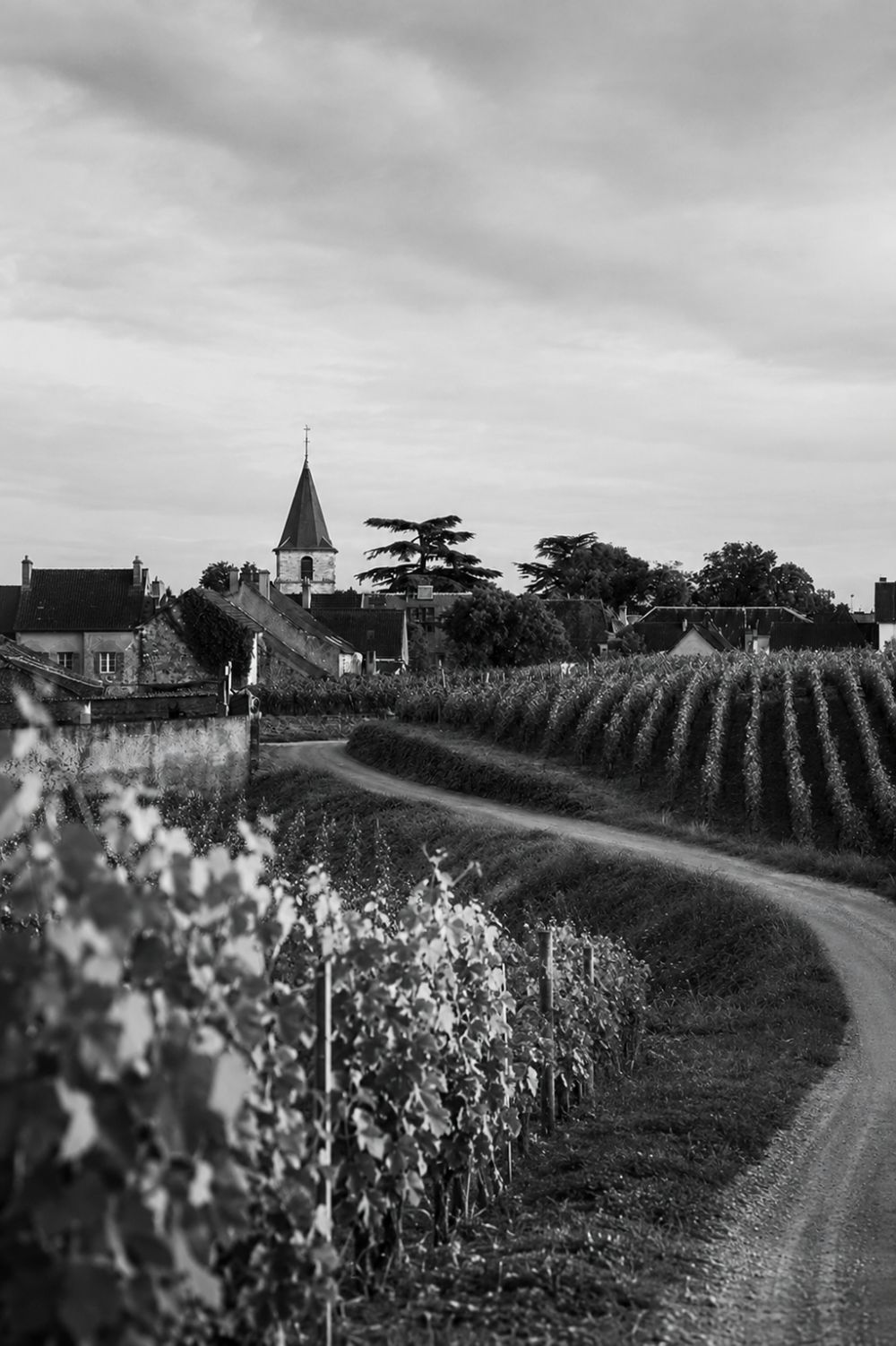
Our reading. Thick skins at moderate alcohol reward a light hand. In 2025 the Côte de Nuits is a question about the cellar as much as the vineyard.
- Picking: 1 to 10 September
- Potential alcohol: 12.2 to 13.5 per cent
- Skins: thick, high polyphenols
- Hail, 22 to 23 June: localised, Chambolle spared
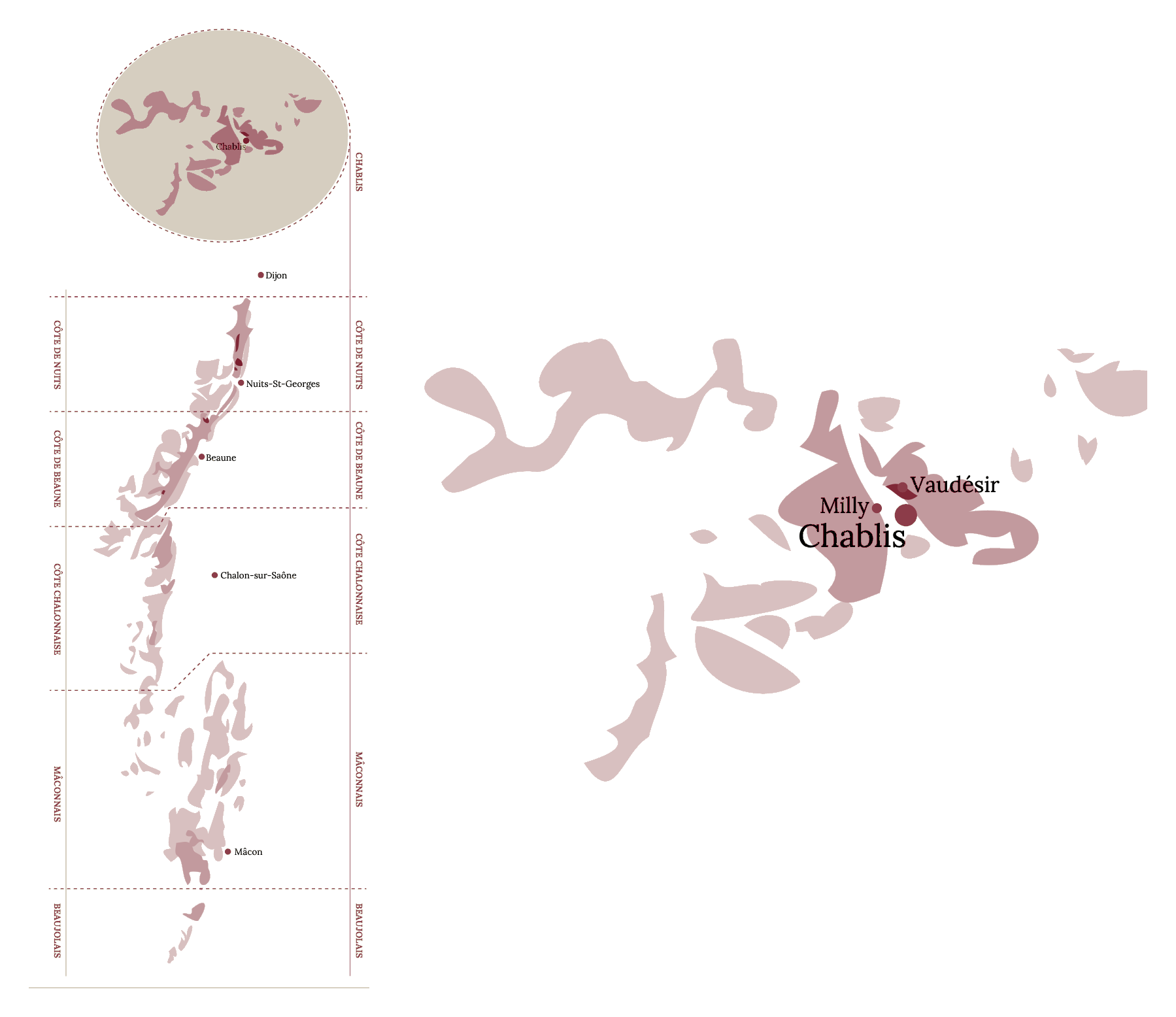
Chablis
Excellent health through the growing season: no damaging frost, low mildew, few treatments. Vaudésir sits in the grand cru amphitheatre on Kimmeridgian marl; Milly, across the Serein, holds the cooler premier cru ground of Côte de Léchet.
Then the rain arrived as picking began, and it fell harder here than anywhere else. Botrytis followed: eighty per cent grey rot in some plots, none in others. Two profiles have emerged, one fresh and tense, the other rounder and fuller; which you taste depends on when the domaine picked and how ruthlessly it sorted.
Our reading. This is the one zone in 2025 where producer selection matters more than appellation. Buy the houses known for triage.
- Picking: 28 August to 11 September
- Potential alcohol: 11.5 to 12.5 per cent
- Spring frost: none recorded
- Rain at harvest: 120 to 130 mm over ten days
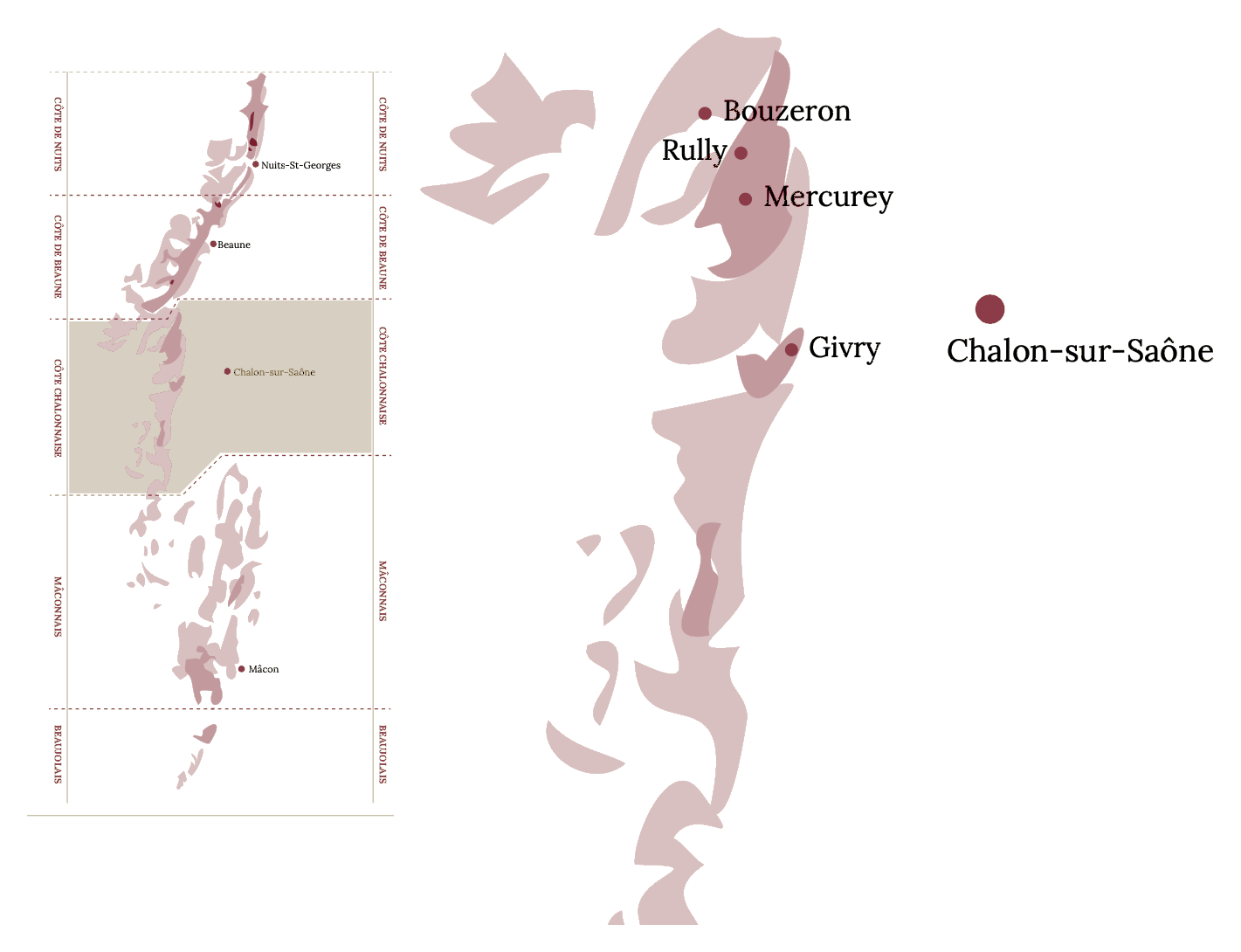
Côte Chalonnaise
The calmest season of any zone. Picking from 20 August, comfortably ahead of the rain, and the highest potential degrees in the region, approaching fourteen. Bouzeron holds the northern tip; Rully is the white heartland, gaining flesh without losing its line.
Mercurey and Givry are the red centre, carrying ripe tannin and real fruit weight. Givry gave the vintage's clearest note on vine age: young vines suffered in the heat while the oldest showed surprising resilience.
Our reading. The clearest opportunity of the vintage. Full ripeness, clean fruit, and none of the scarcity premium that follows the famous names.
- Picking: from 20 August
- Potential alcohol: approaching 14 per cent
- Conditions: the most settled of the vintage
- Heat peak: 35.8 °C
Mâconnais
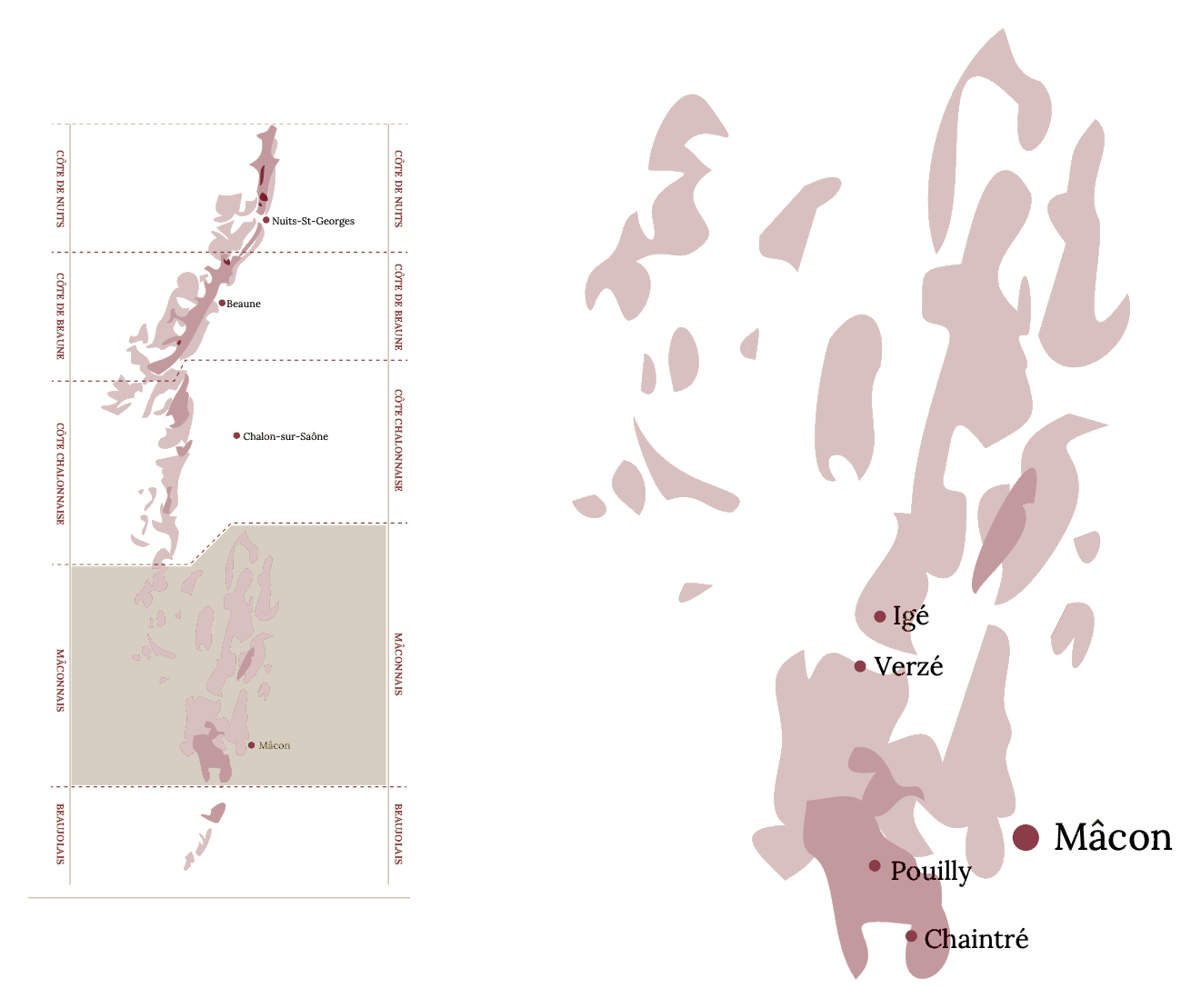
The most eventful season in Burgundy. Hail on 1 June in the south and again on 19 and 20 July in the north; mildew and the August water deficit did the rest. Igé and Verzé hold the northern ridges; Pouilly and Chaintré anchor the south, where the damage was concentrated.
Extreme variance parcel to parcel, ripeness described as en dents de scie, saw-toothed, and some vineyards at fifteen hectolitres per hectare. Where the fruit came in clean the wines are very good: ripe tropical fruit, refreshing acidity, twelve to thirteen degrees.
Our reading. In 2025 the Mâconnais is a year to buy names rather than places. The generalisation is close to useless here.
- Hail: 1 June and 19 to 20 July
- Heat peak: 34.2 °C
- Character: highly heterogeneous
- Style: ripe tropical fruit, 12 to 13 per cent
Beaujolais
The most striking analytics in Burgundy. By 21 August Gamay was already at twelve degrees potential, yet total acidity came in a gram above 2020 and malic was the lowest in thirty years. Bunches weighed seventy-six grams and the health of the fruit was excellent.
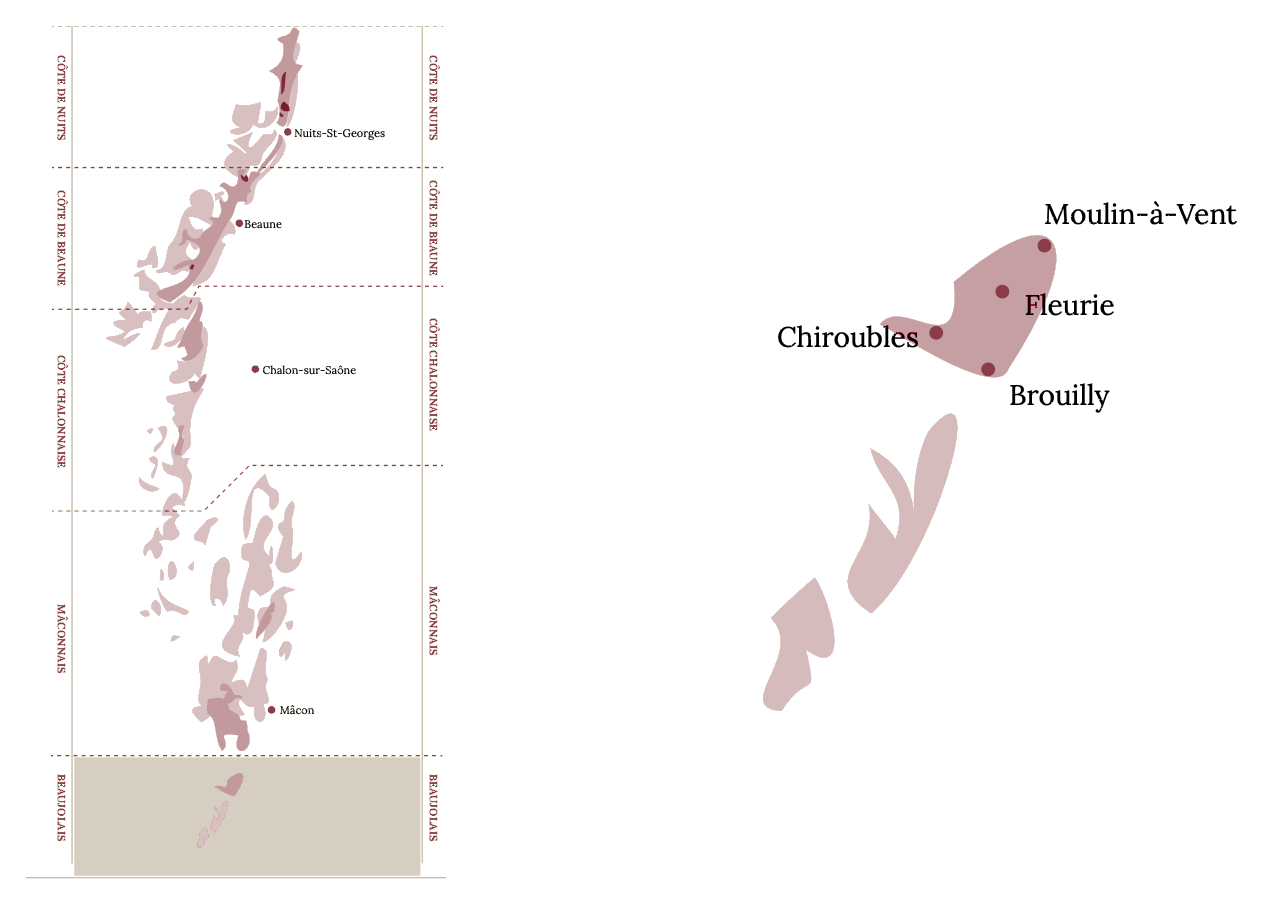
On the granite core the structure reads clearly: Moulin-à-Vent for architecture, Fleurie for perfume over a firmer frame, Chiroubles for lift at four hundred metres, Brouilly for breadth. Firm, structured wines built for five years and more.
Our reading. A materially different signature from the run of light, early-drinking Beaujolais. The crus deserve attention this year.
- Ban de vendange: 23 August whites · 25 August reds
- Bunch weight: 76 g
- Total acidity: a gram above 2020
- Malic: lowest in thirty years
Overall impression
It is still early for definitive judgements. Volumes are frustratingly small at some of the leading domaines, and the quality is what makes the vintage compelling. High quality with limited availability is a combination that could make 2025 an especially sought-after Burgundy vintage.
Many of the ingredients of an excellent Burgundy vintage are here.
The full report
Zone by zone, with the picking dates, the analytics and our reading of each. Download the full report, PDF, 23 pages, free.

Related Articles

Begin your application.
Every application is reviewed to preserve the character of the Crurated community.
Each is considered with care and discretion.
